


-
 Dec 27 , 2025
Story of Gul-Begum
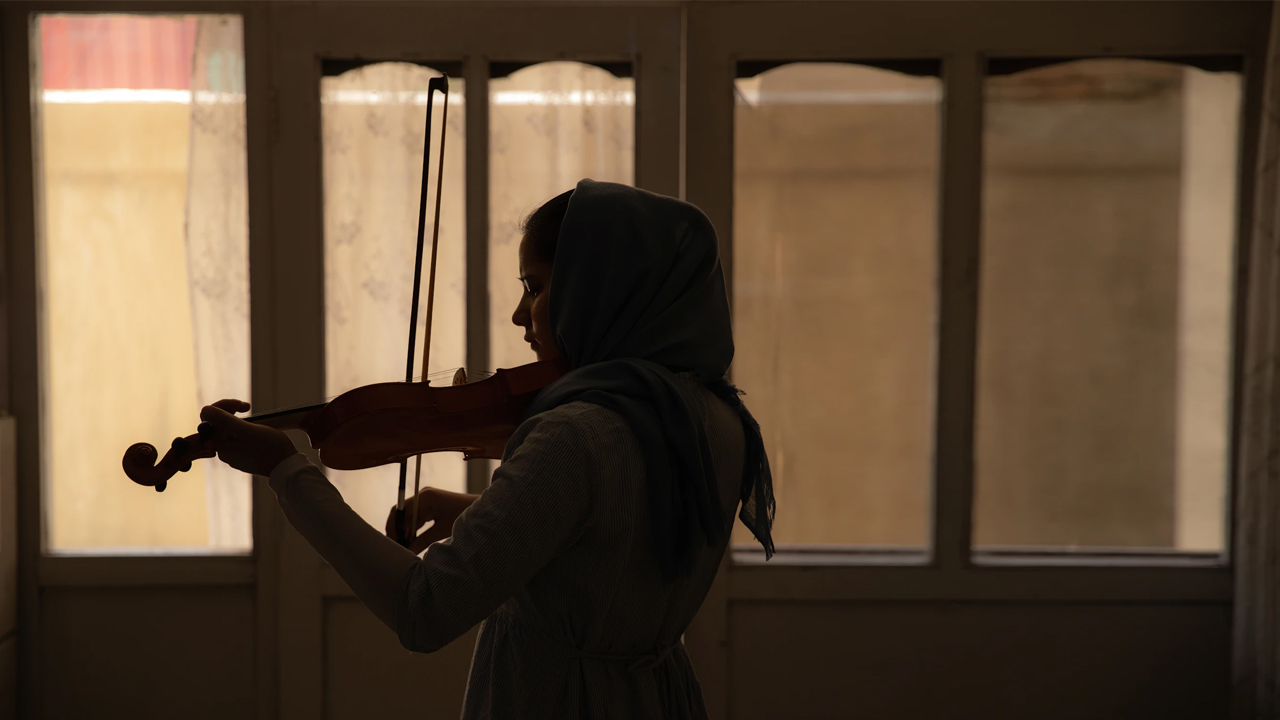
Gul-Begum was a teenage girl from a Hazara family in Kabul when the Taliban returned to power in 2021. At just 14 or 15 years old, she was about to finish her school, but the new restrictions closed the doors to education for girls. Her older sister had been a defense lawyer and the family’s only breadwinner after their father passed away. When the Taliban banned women from most jobs, the family lost their income and had to move repeatedly to avoid threats against the sister. Left with no way to study or support themselves, Gul-Begum and her siblings felt they had nothing left to lose.
Gul-Begum joined small, peaceful women’s protests calling for the right to education and work. Later, when street protests became too dangerous, she and her sisters continued from home. They held indoor demonstrations, painted bruises on their faces to highlight Taliban violence against women, and marked occasions such as International Women’s Day and protests against the targeting of Hazaras. Photos and videos of these actions, including some where the girls did not cover their faces, were shared with media outlets. The Taliban identified her and her siblings through these images.
On 27 March, during Ramadan, Taliban forces raided the family home while they were preparing for Iftar. Four armed men, with no female officers present, entered forcefully, searched the house, and took Gul-Begum, her two sisters (one only 14 years old), and their brother. Family members who resisted were beaten severely; the girls were struck with rifle butts until some lost consciousness. They were not taken to the promised local police station but to a detention facility in the Ministry of Interior compound. They were held for five days in a dark, windowless room without adequate food or water for the first two days.
No charges were formally presented, no lawyer was allowed, and no fair hearing took place. During interrogations, the detainees were shown photos and videos from their protests found on seized phones. The Taliban repeatedly accused them of receiving foreign money to protest, promoting Western culture, and destabilizing Afghanistan. They demanded the names of other activists. When the girls denied the accusations and said they knew no one else still in the country, they were beaten again. No evidence was presented in a court, and no independent judge reviewed the case.
5. Key human rights violations observed:
- Severe physical violence and cruel treatment, including beatings with rifle butts, causing lasting injuries.
- Discrimination based on gender and ethnicity: repeated insults targeting them as Hazara women, claiming Hazara girls alone were responsible for protests and were “un-Islamic.”
- Complete absence of female guards or staff, violating requirements for gender-sensitive treatment.
- Denial of food and water for days, and detention in inhuman conditions.
- No access to legal counsel or fair trial procedures.
After five days, international pressure, especially from UN human rights officials, including Special Rapporteur Richard Bennett, and child rights organizations, helped secure their release. The Taliban required signed pledges from family members, tribal elders, and property deeds as “guarantees” that the family would never protest again. They also threatened severe consequences if the girls ever spoke publicly about their experience.
Gul-Begum and her family are no longer in Afghanistan, but the fear and trauma continue with them. Her story shows the heavy price Afghan women and girls continue to pay simply for demanding their basic rights.