


-
 Jun 15 , 2026
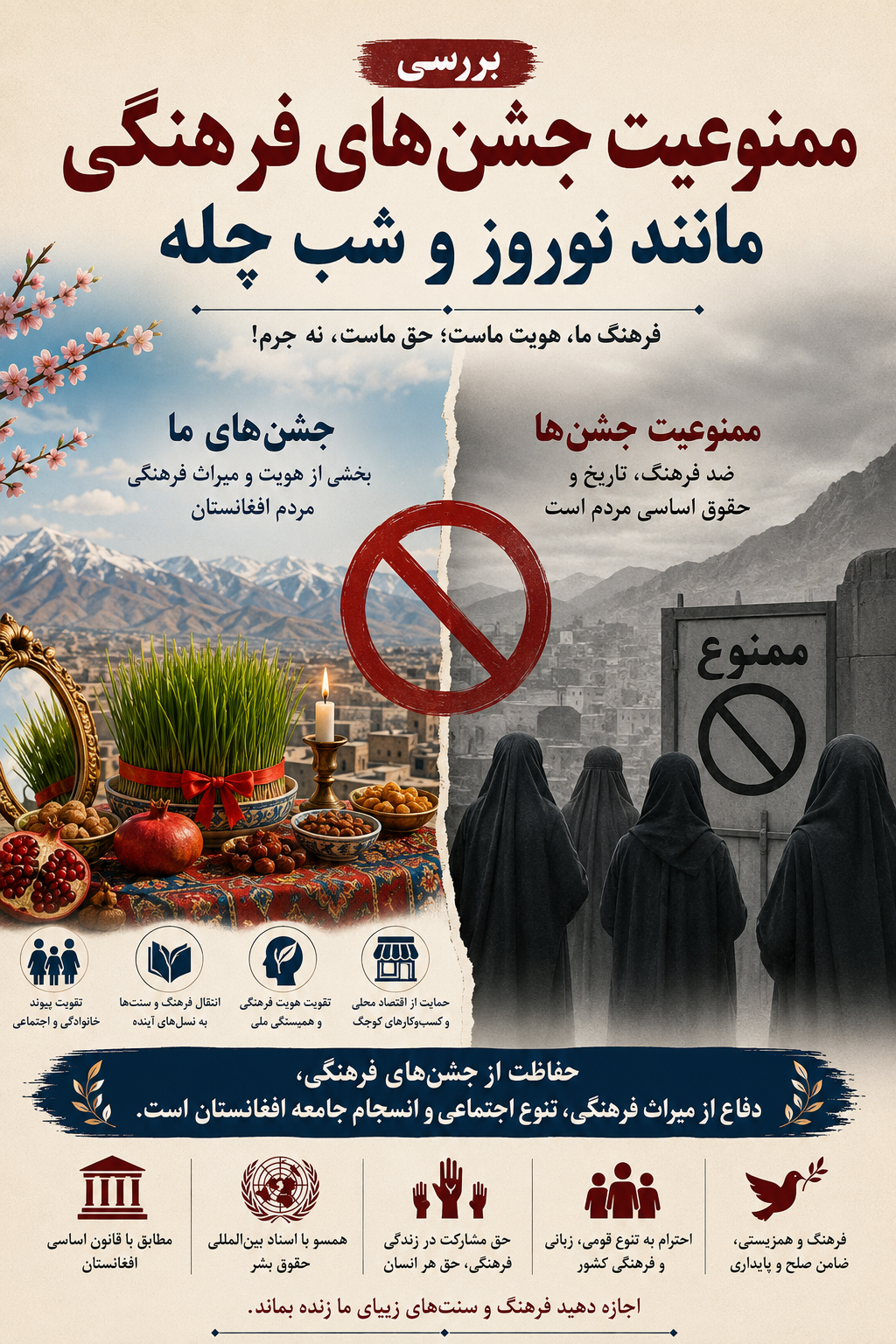
The Ban on Cultural Celebrations: Afghanistan’s Loss of Nawruz and Yalda Night
Contributors: Participants of the “Advancing Women’s Rights Program”, FTD-N
Introduction
Afghanistan is a country rich in ethnic, linguistic, and cultural diversity. In such a society, cultural celebrations like Nawruz (Solar New Year) and Shab-e Yalda (Yalda Night) are more than just festivals or entertainment. They are important parts of the people’s shared identity and symbols of cultural coexistence. These traditions give people the opportunity to preserve their values, customs, and beliefs, and pass them on to future generations.
Unfortunately, since the Taliban returned to power on 15 August 2021, Afghanistan’s cultural policies have changed dramatically. Many traditional celebrations have been restricted or effectively banned. This article examines the consequences of these bans from cultural, social, and legal perspectives, and highlights how they conflict with national laws and international human rights standards.
The Importance of Cultural Celebrations
Nawruz and Yalda Night are among the most significant cultural traditions in Afghanistan. Nawruz symbolizes renewal, hope, and the rebirth of nature. These festivals are celebrated by different ethnic groups with unique customs such as house cleaning, growing sprouts (sabzeh), family visits, storytelling, special foods, traditional music, new clothes, and gift-giving.
These traditions are not merely symbolic; rather they strengthen family and social bonds, help preserve local culture, and create opportunities for connection across generations and communities.
From a cultural rights perspective, such celebrations are part of people’s right to participate in cultural life- a right that governments are obligated to respect and protect.
Taliban Restrictions on Celebrations
The Taliban, based on their own strict interpretation, have limited or banned several cultural festivals. These restrictions include preventing public gatherings, banning traditional music and dance, restricting cultural symbols, and limiting women and girls’ participation in collective events. In some cases, people have even been stopped from visiting green hills or enjoying spring outings.
These policies go beyond simple restrictions. They harm the social fabric by weakening cultural transmission to younger generations and damaging small local businesses that rely on these festivals for income (such as sellers of traditional foods, clothes, gifts, and handicrafts).
Cultural and Social Consequences
Banning cultural celebrations does more than violate human rights- it weakens Afghanistan’s living cultural heritage and social relationships. When these traditions are suppressed, people gradually lose parts of their identity, connections between generations weaken, and the sense of belonging to a shared community fade.
In a diverse country like Afghanistan, these festivals play a vital role in building social unity and reducing ethnic and cultural divides. Restricting them can lead to greater isolation, less social participation, and weakened community cohesion.
Economically, these bans also hurt small businesses and local livelihoods that depend on the increased activity during festive seasons.
Conflict with National and International Law
These restrictions are not only socially and culturally harmful but also legally questionable. Afghanistan’s Constitution emphasizes human dignity, legitimate freedoms, and the protection of cultural values. Limiting traditions that form part of the people’s identity contradicts these principles.
International human rights documents, including the Universal Declaration of Human Rights, the International Covenant on Civil and Political Rights, and the International Covenant on Economic, Social and Cultural Rights, clearly protect the right to participate in cultural life and preserve cultural traditions. UNESCO also recognizes Nowruz as part of humanity’s intangible cultural heritage.
Conclusion
Cultural celebrations such as Nawruz and Yalda Night are vital parts of Afghanistan’s cultural heritage and social identity. They strengthen family ties, preserve traditions, and promote social unity in a diverse society. The Taliban’s restrictions on these celebrations have caused significant cultural, social, and legal damage.
These policies conflict with both Afghanistan’s Constitution and international human rights standards. Protecting cultural festivals is not just about preserving old customs — it is about safeguarding cultural diversity, social cohesion, and the fundamental rights of the Afghan people.
References:
- Islamic Republic of Afghanistan (2004). Constitution of the Islamic Republic of Afghanistan.
- United Nations (1966). International Covenant on Economic, Social and Cultural Rights.
- United Nations (1966). International Covenant on Civil and Political Rights.
- Islamic Emirate of Afghanistan (2024). Law on the Promotion of Virtue and Prevention of Vice.
- UNESCO (2003). Convention for the Safeguarding of the Intangible Cultural Heritage.
- UNESCO (2016). Nawruz: Intangible Cultural Heritage of Humanity.
- United Nations (1948). Universal Declaration of Human Rights.